
Spotlight: Mantis – Rapper & Management at Kele Productions
 Credit: yutriseup/Savvy Vanuatu
It’s okay to have strong emotions but remember that we always have the power to choose what we do next.
How did your family’s support shape your upbringing and contribute to the person you are today?
Growing up, my family always tried their best to make sure I had the right tools to survive in life. Starting simply from waking up on time and making my own bed to respecting everyone around me, it was always about teaching me that the small habits I create now will help me in my future pursuits. I was raised by my mother growing up in the same house with her siblings, my uncle and aunty all living with my grandparents. Because my mother would work long hours, every one of my family members played vital roles in mentoring about life. Coming from a Christian background, our household believed strongly in upholding our faith and till this day, that has shaped the person I am and everything I do.
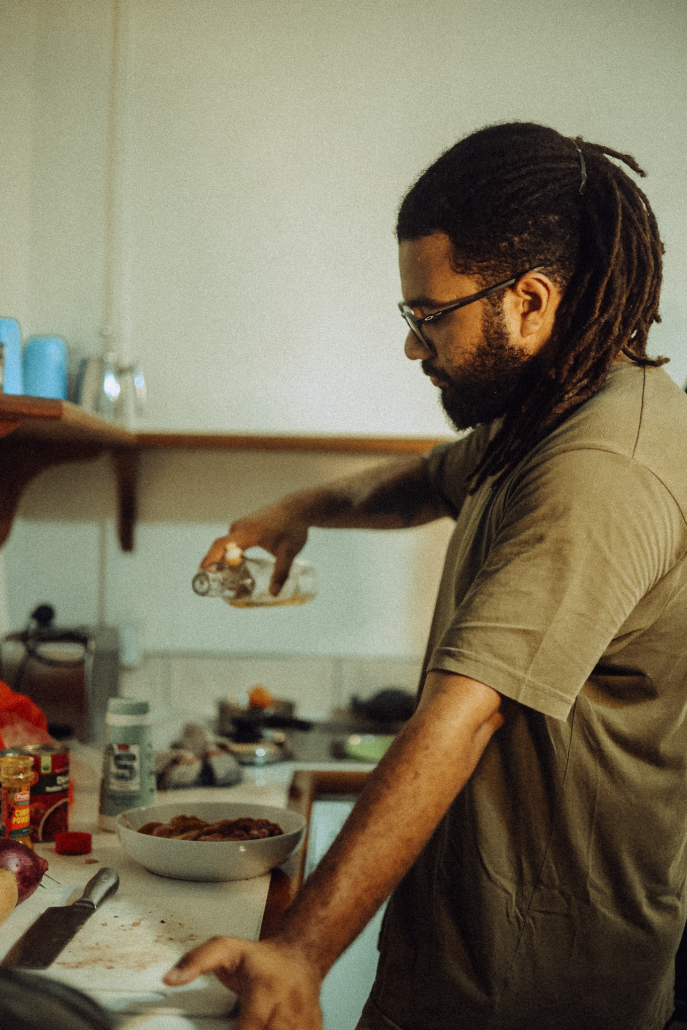

You started rapping at a young age, and by 18, you and the boys from Confliction had already performed at several shows. How did your journey in music begin, and who influenced you to start?
My journey, as well as all Confliction members at the time, started in the church. My favourite part of Sunday service was always singing choruses during praise and worship. We would attend youth sessions every Friday evening and would make music after everyone else had left. In the beginning, we did not have our own equipment so we would use the church microphones to record our first songs. At first, we just wanted to do it as a hobby. Outside of church music, all of us were into RnB and notably Hip-Hop and Rap music. Our mentors at the time and still to this day were local artists, some of whom were actually family members. Jamala was the first person I had ever seen rapping in the church. His articulation and lyricism inspired me to always write from the heart and to keep my pen sharp. His brother Local Remedy was the first person to ask us if we were serious about wanting to make music and really pushed us into the direction, we were at the time not even thinking of. Much like our origin, we started performing cover songs as items in church, then at other centers, then eventually got our first big gig in 2014 during Zion Fest. After that show, we met Nawarake who really opened doors for us into the music industry and helped us build up our group. He was our manager for a couple of years, got us to network with other artists like Krasrut Star, Tujah, Stan as well as many others.
Can you take us through your transition from Confliction to releasing singles as Mantis and now running Kele Production?
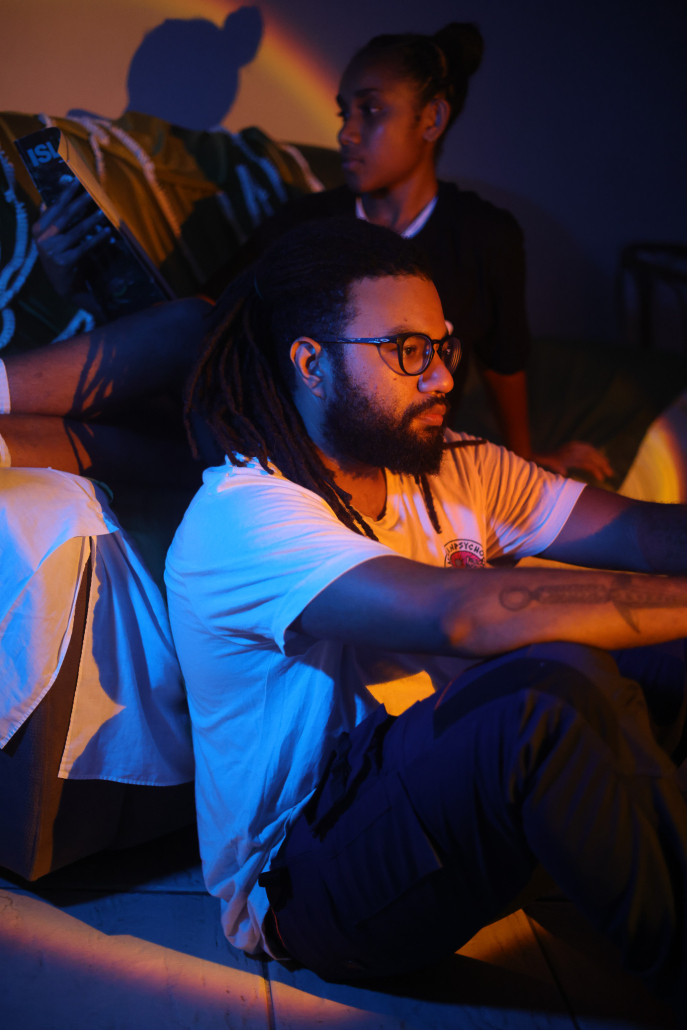
I think my transition was a natural one. With Confliction, the goal was always about spreading a message and sharing stories of our reality. The songs we wrote were for people to listen and think so they had to be appealing to the public, meaning we would be strict about how we wrote our lyrics and what we said. In 2018 was when we had released our final songs and an album, the following year I had moved to New Zealand for school and our group went on hiatus as all of us took different paths in life. While I was studying, I went through many challenges, struggling with homesickness, anxiety and depression. Making music was really my only way of dealing with my traumas. But what I would write about were very personal and I did not want to associate the reputation Confliction had already built.
An example is using explicit lyrics, which I could not use under the band’s name. Releasing my own music gave me more creative freedom with how I would structure songs, and I could write longer verses and really experiment vocally and try to find my own voice as Mantis. Coming back from my studies and reconnecting with my fellow band members, while things were not the same as when we were in a band, we still all felt strongly about continuing to pursue music together in some shape or form. By this time, I already had gotten some of my own recording equipment and I had a handful of songs that I wanted to release as an album called Personal Therapy. We decided that we would continue creating music but under a different name, this time not as a band but as a group of musical engineers supporting artist projects, similar to how a record label would operate. Our first big project was my first album and we released and sold it back in 2022. We organised a launch event, sold food and kava and raised enough money to build a small studio with basic recording equipment. Ever since, our goal has been to support upcoming artists that have potential and do what we can to direct them in the direction their music can take them by giving them a space where they can create freely. In a sense, we are simply doing as our mentors did for us when we were starting out.
Through Kele Production, you’ve helped develop young artists, including several female musicians who have found success. Can you tell us about them and the impact of your mentorship?

I think to date our team’s most successful project artist has been Shazza. Although her most popular songs were produced by Flickzone, many of her first recordings were done with us even before we had built our studio space. Working with her has taught us many things about managing an artist, communicating and understanding their needs and giving constructive feedback where it’s needed. We are grateful that she has gotten to bigger stages now and is still pursuing her passion for music. We always try to encourage the artists who work with us to keep making music a part of their lives regardless of if they chose to pursue it professionally or not. We know full well how hard it can be to make a stable income through music so when we see that someone who we worked with is still creating music it always makes us happy and proud.
Right now, we have a couple of young talented artists on our team. Recently two of them, Mental-E and Ali-D have both released their first singles a few months ago and are currently working on their next projects and we can’t wait to share them.
While attending Ecole Cordeaux, how did you juggle schoolwork, songwriting, music production, and church commitments?


My mother was very intentional in creating an environment for me to keep me disciplined. In other words, she was strict about what I did with my time outside of school, the only other priorities were time spent with family and time at church. While I was never an A+ student, I had to prove to her that I could make time for my music while also making enough time for my studies and my church commitments. In a way, challenging myself helped me to keep some sort of structure in my weeks. I still struggled everyday keeping up with my classes as my mind was always on making music. My commitment to church and youth sessions on Fridays also helped keep me out of trouble or bad company. I had good close friends at school that have now become like family to me, and we supported each other through our hardships.
How did you manage stress and frustration back then compared to how you handle it now?

I think back then I was very much dependent on the people around me as support systems whenever life felt difficult. At home, my family’s prayers and faith kept me strong in the face of uncertainty, at school the comradery I felt from my friends assured me I was not alone when things were challenging.
I would also drink a lot of alcohol that always used to help me relax as I was usually with my cousins or friends. When I found music, that also became another way for me to express myself and take out my emotions. When I moved for 3 years, for the first time I was separated from my family and friends and had to learn to be independent, relying only on myself and what I had learnt up until that point. It was at that time that my faith was truly tested and where I learnt hard lessons about myself and the world around me.
I can now say that after all these experiences, the best way I have been managing my stress is focusing on creating a healthy lifestyle. When we develop ourselves physically, we will also develop mentally. This includes trying my best to eat healthy meals, drinking lots of water every day, getting enough sleep and rest as well as regular exercise. All these little habits have helped me keep on top of my stress levels, be it at home or at work. As I get older, I have learnt to be more selfish with my time and be honest about how I feel in a day and say, “maybe I won’t go out and sleep early” or “maybe I won’t drink kava tonight and just stay home”. I find that the healthier habits you try to implement daily, the more likely you will develop a lifestyle that will help you deal with everyday challenges. This also goes in line with what the bible says about our bodies being temples of God that we must take care of (1 Corinthians 6:19-20).
When reggae dominated the local music scene and rap was often associated with negative stereotypes, what gave you and the boys the confidence to pursue rap despite public opinion?
I think the fact that there were negative stereotypes about rap music made us more reluctant to use it and prove people wrong. To us, rap music was always about giving a voice to people who couldn’t be heard, an artform of expression where you could say how you felt about your reality. It’s an integral part of Hip-Hop culture that we as a group embraced from a young age. A lot of the typical stereotypes stem from how the art is projected through the clothing, the “in your face” attitude, cursive language and questionable subject matters at times (mostly associated with gangster music or sexually explicit songs). We really wanted to change that narrative and let people know that rap music was a powerful tool that could inspire change.
Personally, I continue to pursue this genre simply because I love rap music. If it’s not your cup of tea, I will never force you to listen. I have been rapping for years now and until I am no longer able to, no amount of public opinion against it will ever be the reason that I stop.
How important is it to surround yourself with the right people, and how do you stay mentally strong in doing so?

Extremely important. While you can’t choose your family; you can choose the people you surround yourself with. If you are hanging out with people who lack vision or goals and who don’t try to seek out such things, neither will you. In Vanuatu, there is an abundance of toxicity from people that comes from different forms like jealousy and hatred, especially on social media. We judge each other so harshly to the point where we become afraid to try anything out of fear that we will be mocked. Having people who can motivate you and encourage you positively in your life will always be beneficial to you. As Melanesians, community is naturally a strong pillar in our lives and it’s important to ask ourselves what that looks like for us and who should have a seat at our table or not.
For me, I have had times where I had to dissociate with certain friends, even family members simply because of how toxic they were. What has kept me mentally strong is knowing that I have the power to choose the people in my circle. Nobody is perfect, and we all have toxic traits. But we can also work on ourselves to be better.
Do you believe women deserve the same respect as men in the music industry? Why or why not?
As an artist myself, I don’t think people should be judged by their gender but by their music. I think the music you produce should speak for itself for you to deserve any form of respect. Our female artists are more often heavily criticised in their music than men are. However, I don’t think it’s related to their music specifically but more so sexism. I’ve seen and had multiple conversations with female artists and usually they find themselves more subjected to being picked on out of jealousy, especially from other women. In that sense, I think female artists have the right to express themselves through their music and they deserve to be heard and treated fairly.
As a man, how do you manage your emotions and anger in both personal and professional settings?

I work in an office with colleagues that are all different age groups both men and women. Everyone has different ways of working and some are easier to work with while others can be difficult. Being respectful is always a key element in working together. It’s important to keep your personal issues separate from your professional ones and vice versa. Managing your time, focusing on your tasks and communicating properly with your colleagues and superiors will help you organize your weeks.
Outside of work, I believe learning to be emotionally intelligent is crucial when dealing with feelings of frustration and anger, as it allows you to have a clear view of what you’re feeling emotional about and take steps to calming yourself. The more you learn and understand about yourself and how you react, the better you can become at managing your emotions.
“Being respectful is always a key element in working together.”
Why do you think it’s important for men to be positive role models for younger boys?
I think that it’s natural and important for boys to have guidance in all walks of life. Even if I grew up not knowing my biological father, I have many father figures that I hold in high regards till this day for the things they’ve taught me. As a young man, I always naturally sought approval from my elders like I had something to prove. I think having strong male figures in my life has helped me to form strong values. Although my biggest role model is my mother, my grandfather’s wisdom and leadership will always be something I rely on daily that I try my best to pass on to my younger peers.


 yutriseup/Savvy Vanuatu
 Credit: yutriseup/Savvy Vanuatu.